Public economics · Wealth taxation · Inequality

Thérèse Bastin

I am a PhD candidate at the Université libre de Bruxelles, affiliated with DULBEA. I work under the supervision of Ilan Tojerow and Benoît Bayenet.

My research lies in public economics, with a particular focus on taxation, gender, intergenerational transfers, and wealth inequality. In January 2025, I was awarded a four-year FNRS–FRESH fellowship.

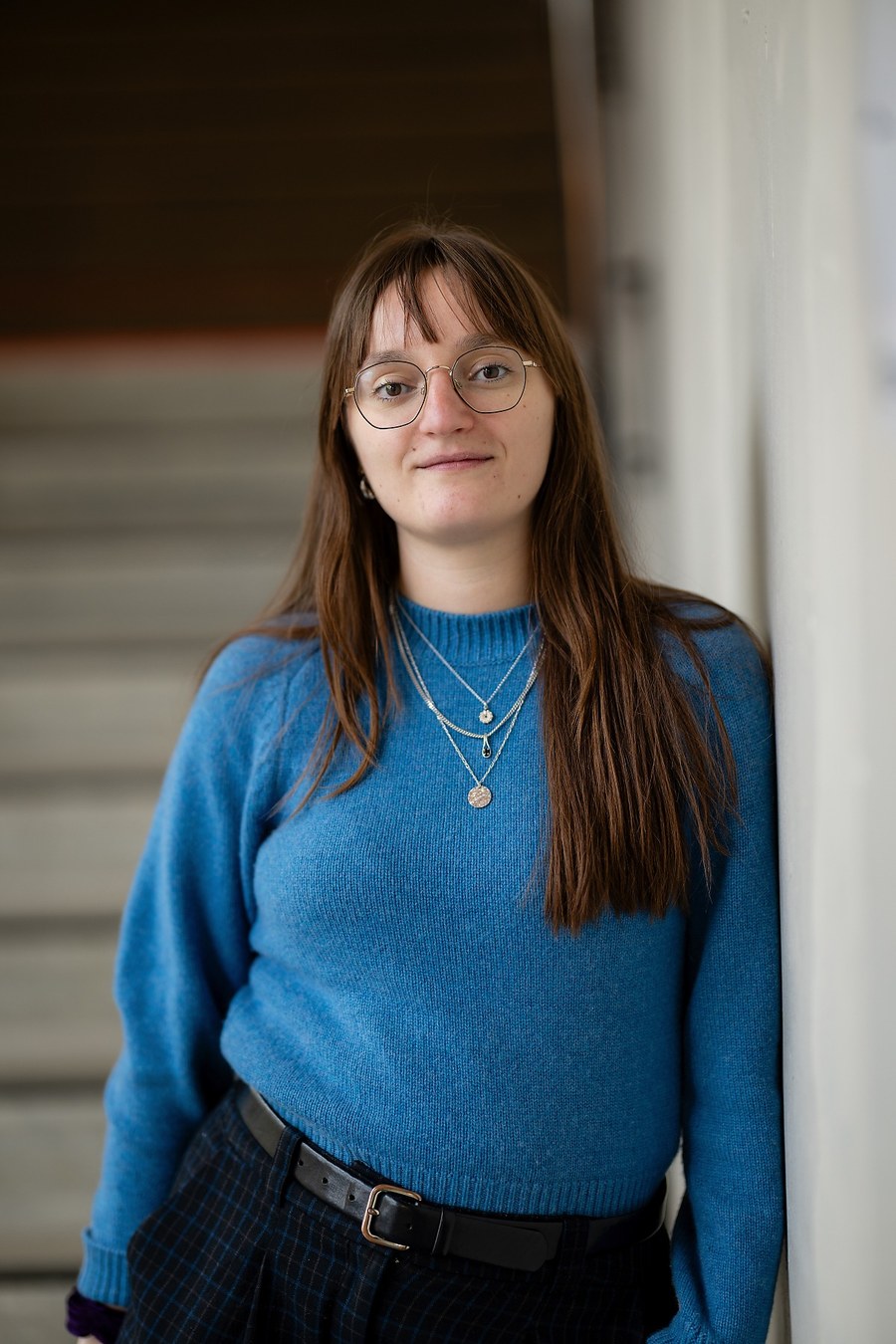
Portrait of Thérèse Bastin

Get in touch

Contact

DULBEA — Department of Applied Economics
Solvay Brussels School of Economics and Management
Université libre de Bruxelles

Current and applied work

Research

Work in Progress

Behavioural Responses to Asset-Specific Wealth Taxes

With Ilan Tojerow, Nikolaos Koutounidis, Milan van den Heuvel, and Constantine Yannelis

Abstract

This paper examines taxpayers' behavioural responses to an asset-specific wealth tax. Leveraging the introduction of Belgium's Annual Tax on Securities Accounts (ATSA) and unique individual-level banking data, we provide the first evidence on the behavioural effects of a financial asset-specific wealth tax. Using a dynamic bunching method, we find no statistically significant evidence that taxpayers near the threshold reduced their taxable securities to avoid the tax. An event-study design further reveals substantial changes in portfolio composition: bond holdings and other taxable assets decline by approximately 27% and 24%, respectively, over 2017–2019, while share holdings fall by about 12% in 2017 only. These declines reflect an important reallocation away from safe, low-return and liquid assets, mainly driven by a minority of taxpayers exiting bonds and shares. Taken together, these findings suggest that wealth taxes targeting fully observable, liquid assets and relying on third-party reporting may limit aggregate erosion of the taxable base while still affecting portfolio composition.

Effect of wealth reception on beneficiaries' professional careers, with a special focus on gender differences

With Ilan Tojerow and Malka Guillot

Abstract

Standard economic theory predicts that a wealth shock arising from the receipt of an inheritance leads individuals to increase their consumption of normal goods, including consumption and leisure, and to reduce their labour supply. At the same time, the fiscal pressures associated with population ageing in Europe have led governments to adopt policies aimed at increasing labour-market participation, notably by raising the retirement age. If these theoretical predictions are borne out empirically, wealth transfers could therefore undermine public efforts to maintain labour-force participation. The first objective of this study is to inform the design of social security and inheritance-tax policies by examining how beneficiaries respond to the receipt of an inheritance. A central question is whether this wealth shock affects male and female beneficiaries similarly. Recent studies find that only women reduce their labour-market participation after receiving an inheritance ([6]; [7]), a result consistent with the greater elasticity of female labour supply. However, this literature does not examine whether the observed effects vary according to the form of wealth transfer, namely an inter vivos gift or an inheritance. Although these two forms of transfer are often treated as perfect substitutes, they differ in several respects that may shape spouses' responses differently. Using high-quality individual-level administrative data on gifts and inheritances, the second objective of this study is to provide the first estimates of beneficiaries' responses to the receipt of each type of transfer.

Report and policy papers (in French)

Calcul de l’impact budgétaire d’un impôt sur les grands patrimoines avant effets macroéconomiques

With Guy Van Camp

Abstract

Dans le cadre de l’exercice de chiffrage des programmes électoraux, le Bureau fédéral du Plan anticipe des propositions de partis politiques pour l’instauration d’un impôt sur les grands patrimoines. Le présent document vise à expliquer la méthode d’estimation de son impulsion budgétaire. Pour ce faire, nous utilisons les données de l’enquête sur les comportements financiers des ménages de la Banque nationale belge.

Nous développons la méthode de calcul pour l’estimation des recettes avec ou sans la possibilité de réponses comportementales des contribuables. Afin d’inclure les potentielles réactions comportementales, nous analysons deux pistes, soit la méthode du bunching et l’inclusion d’élasticités du patrimoine net estimées à l’étranger. Les résultats montrent que nous préserverons uniquement la deuxième méthode lors du chiffrage DC2024.

De plus, ce document expose la revue de la littérature des effets de la taxe sur des indicateurs macroéconomiques – littérature pertinente pour comprendre l’inclusion de l’impôt dans les modèles HERMES et QUEST.

Étude relative à la taxation des grands patrimoines

With Magali Verdonck, Benoît Bayenet, and Ilan Tojerow

Abstract

L’idée d’une taxe sur les grands patrimoines refait surface en Belgique et ailleurs (Irlande, Allemagne, États-Unis, Royaume-Uni), à l’opposé de la tendance observée ces dernières années. Si douze pays de l’OCDE y avaient recours en 1990, ils ne sont plus que trois depuis 2018. Une telle taxe pose une série de questions.

En Belgique, en l’absence de cadastre du patrimoine, l’instauration d’un impôt sur la patrimoine net (IPN) nécessiterait au préalable soit la déclaration par les contribuables de leur patrimoine soit le rassemblement de l’ensemble des données existantes auprès des différentes institutions ou parties tierces. Ensuite se poserait la question du choix des modalités de la taxe (taux, seuil, progressivité, etc.), ce qui n’est pas neutre en termes d’équité et/ou d’efficacité.

Une telle taxe pourrait engendrer, à court terme, des comportements d’évitement (ou ingénierie fiscale dans le respect de la loi) ou d’évasion fiscale (contournement de la loi) et, à plus long terme, des modifications de comportements en termes d’épargne, d’offre de travail et de migration. Cette étude fait le tour de la question.

Media coverage: L’Echo, Le Soir, RTBF, Trends, and La Libre.
Selected conferences

Presentations